Artists
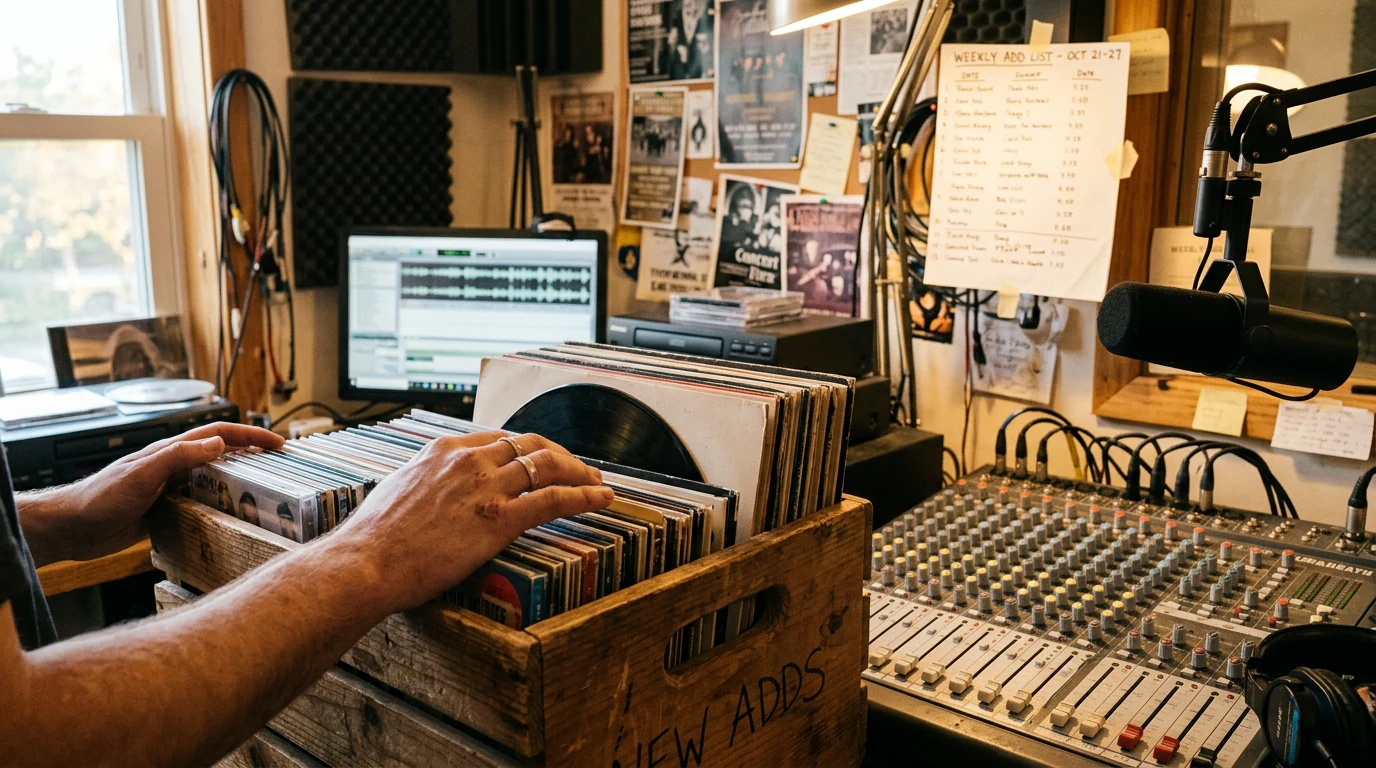
How a Song Actually Gets Added to College Radio Rotation
Before an algorithm ever hears a track, a music director already has. Here's the human chain that puts an unknown artist on the air.
Musicians covered through their work: how a record was made, what changed between albums, and the influences audible in the arrangements.
Before an algorithm ever hears a track, a music director already has. Here's the human chain that puts an unknown artist on the air.
Johnny Cash at 62, Bob Dylan at 56, Leonard Cohen at 82 — the documented conditions behind late-career masterpieces, from producer matchmaking to mortality itself.
Paul McCartney took the bass because someone had to; Dave Grohl stepped out from the drums to front Foo Fighters; Stevie Wonder traded standards for synthesizers and rebuilt funk.

Radiohead's pay-what-you-want experiment, Macklemore's distribution deal, Chance the Rapper's Grammy without a label — the real history of artists going direct.

Run-DMC's remake of "Walk This Way" revived Aerosmith and took rap national; Queen and Bowie cut a single in one day. The history of the career-changing duet is short and specific.
Miles Davis guiding John Coltrane, Quincy Jones learning from Ray Charles, Dr. Dre betting on Eminem — documented chains of teaching that run through a century of records.